Amrita
ke Raqs
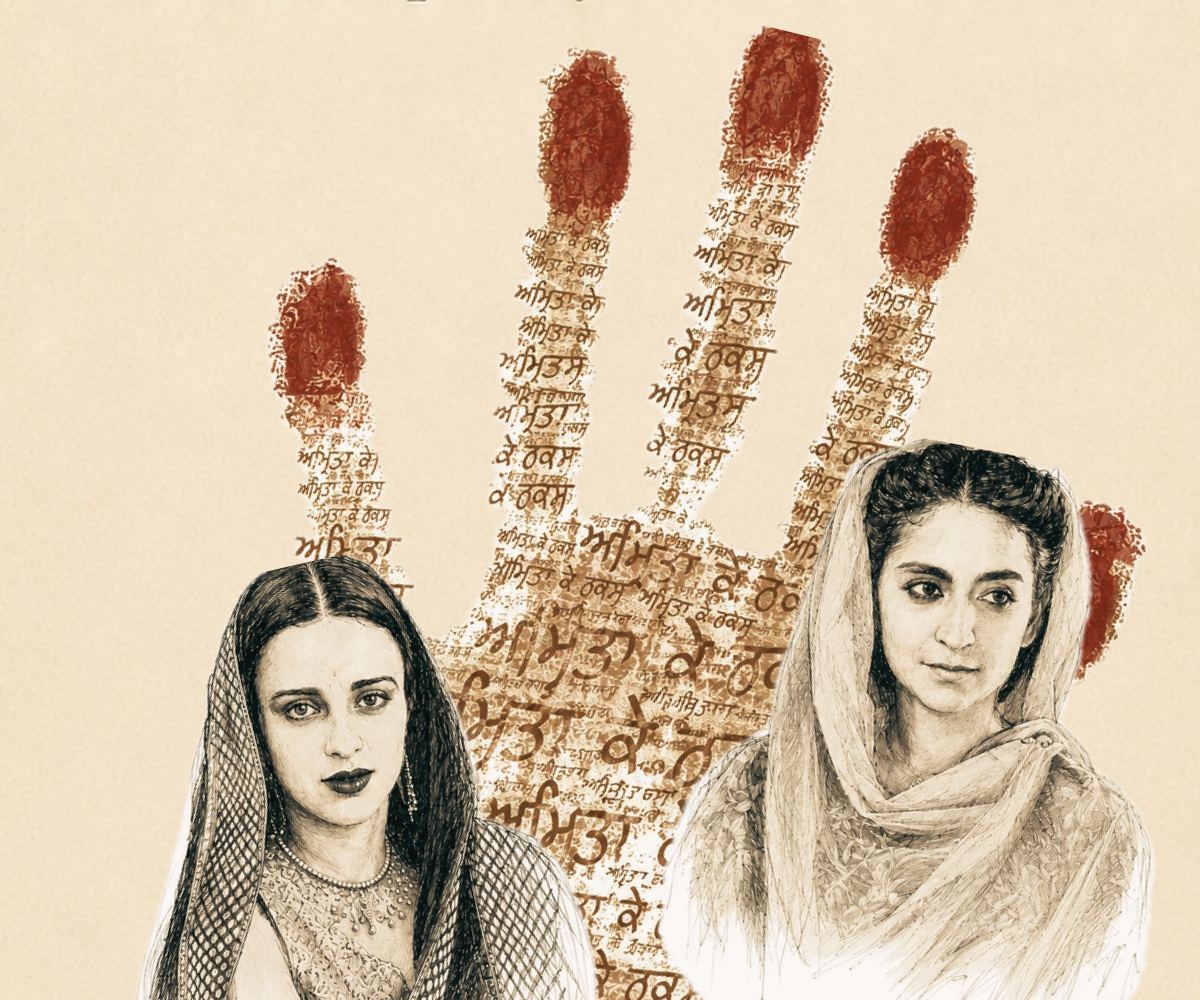
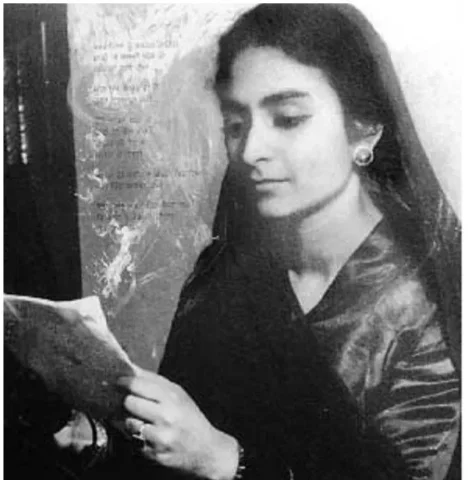
Immersed in poetry, painting and music — the canvas of Amrita Sher-Gil and the verse of Amrita Pritam, given to movement.
A luminous celebration of pen and paintbrush.
10 August 2026
She painted what could not be said. She wrote what could not be painted. We dance what neither could hold still.
Two figures shaped how a young India imagined itself — one with a brush, one with a pen.
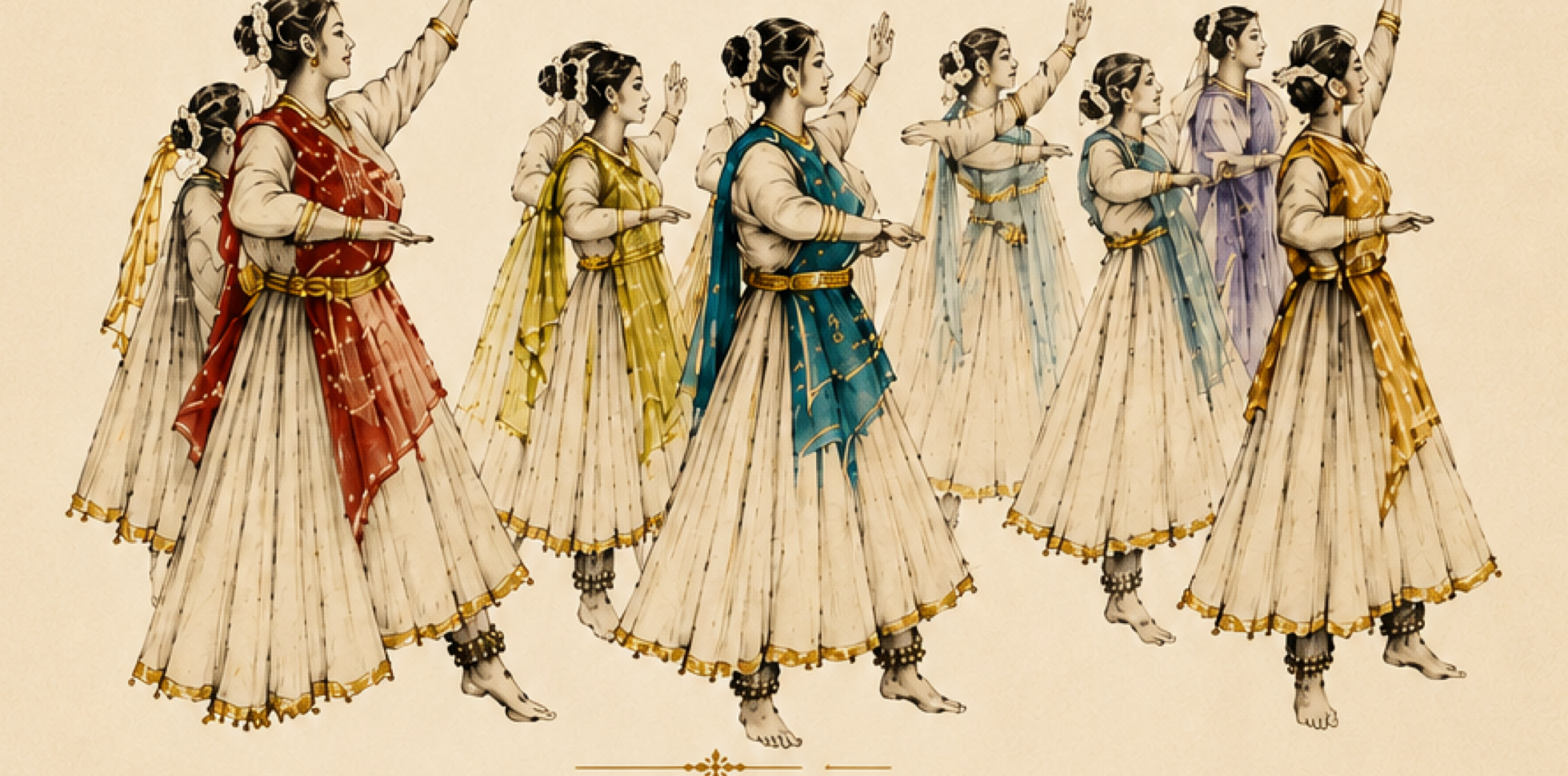
Amrita ke Raqs gathers their canvases and couplets and lets them breathe again through the grammar of Kathak: the spin, the stillness, the struck heel.
Conceived and choreographed by Raman and Mohika — a dancer duo working as one — the evening moves between paint and poem, carrying two lives that never met and somehow always rhymed. What emerges is neither recital nor biography, but a conversation held in movement.
Colour as the stage — the palette the choreography is set against.
Words as the score — cadence the dancer keeps time with.
The spin, the stillness, the struck heel — binding paint to poem.
One language of the body.
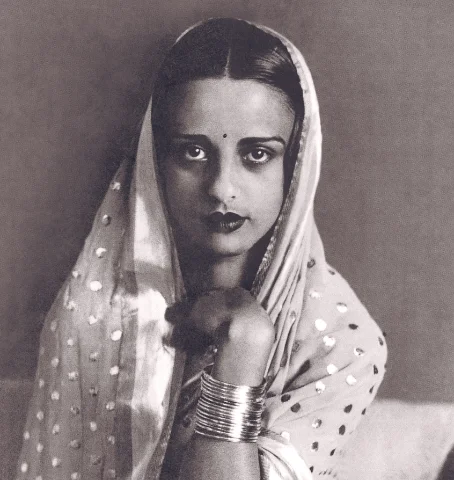
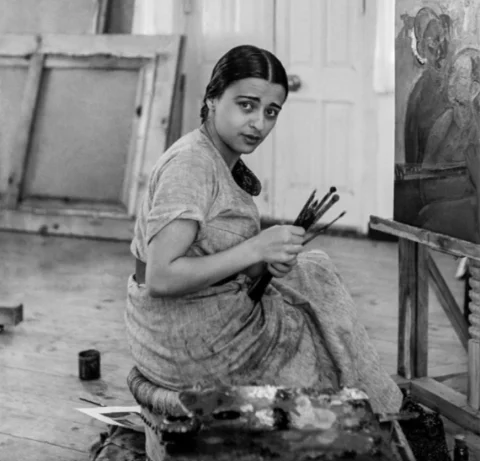
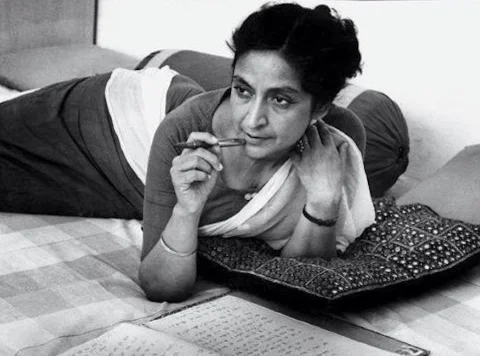
The evening unfolds in two movements — a scripted musical, then an ensemble in motion.
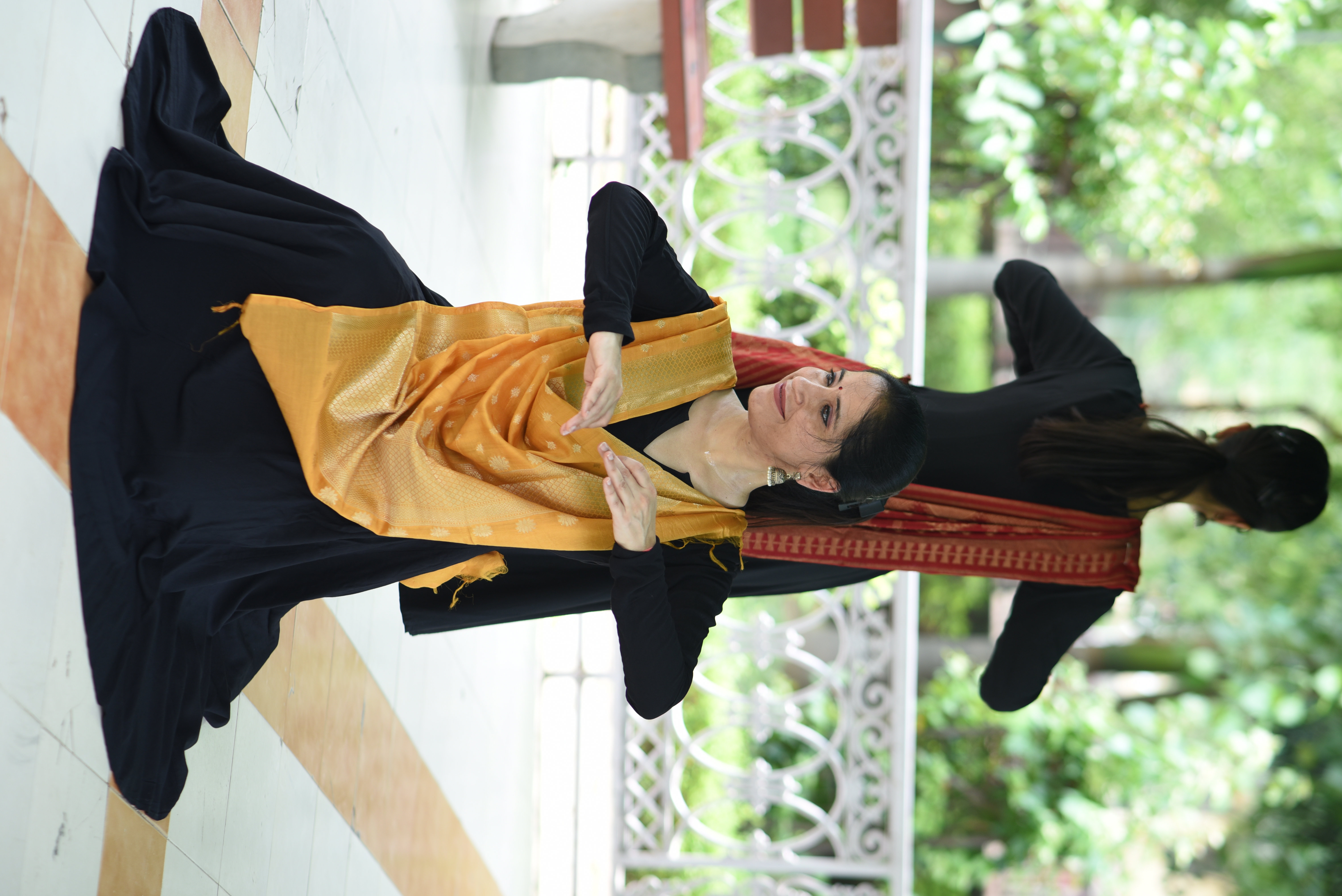
Amrita ke Raqs
A scripted, immersive piece — the poet and the painter given breath through Kathak, live music and spoken narration.
Sanchari
An interpretive presentation by the students of KathakReet, where music becomes movement and rhythm finds its flow.
- 01 Taal Paksh
- 02 Bhajan — Radhe Govind Krishn Murari
- 03 Hastak Dhara
- 04 Tarana
- 05 Lasya
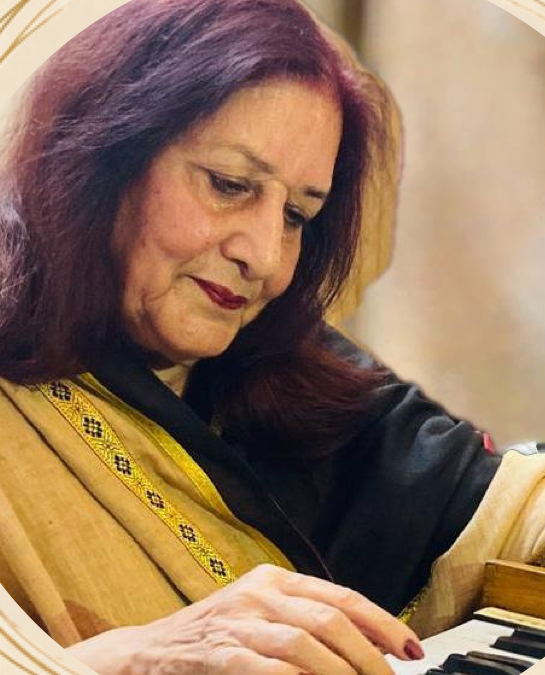
Pamela Singh
We are honoured to welcome Pamela Singh, whose voice has carried the classical and ghazal traditions across decades — and who lends her words to Amrita ke Raqs as its scripting and narrating voice.
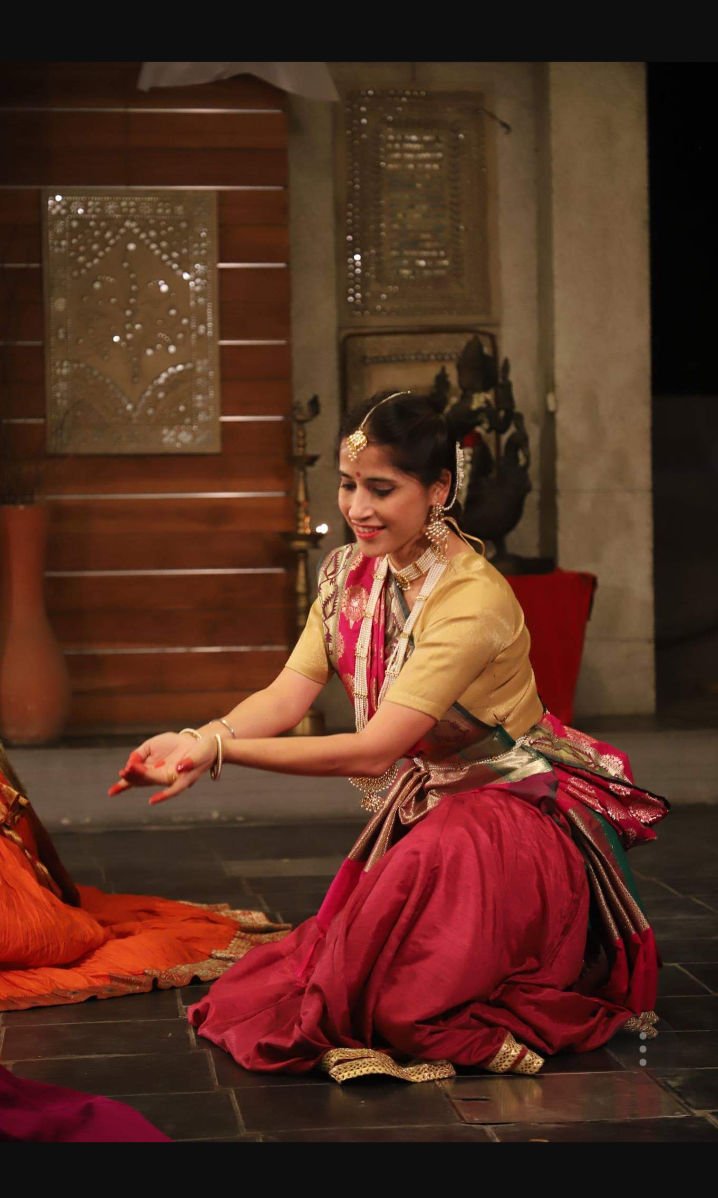
Ramandeep Kaur
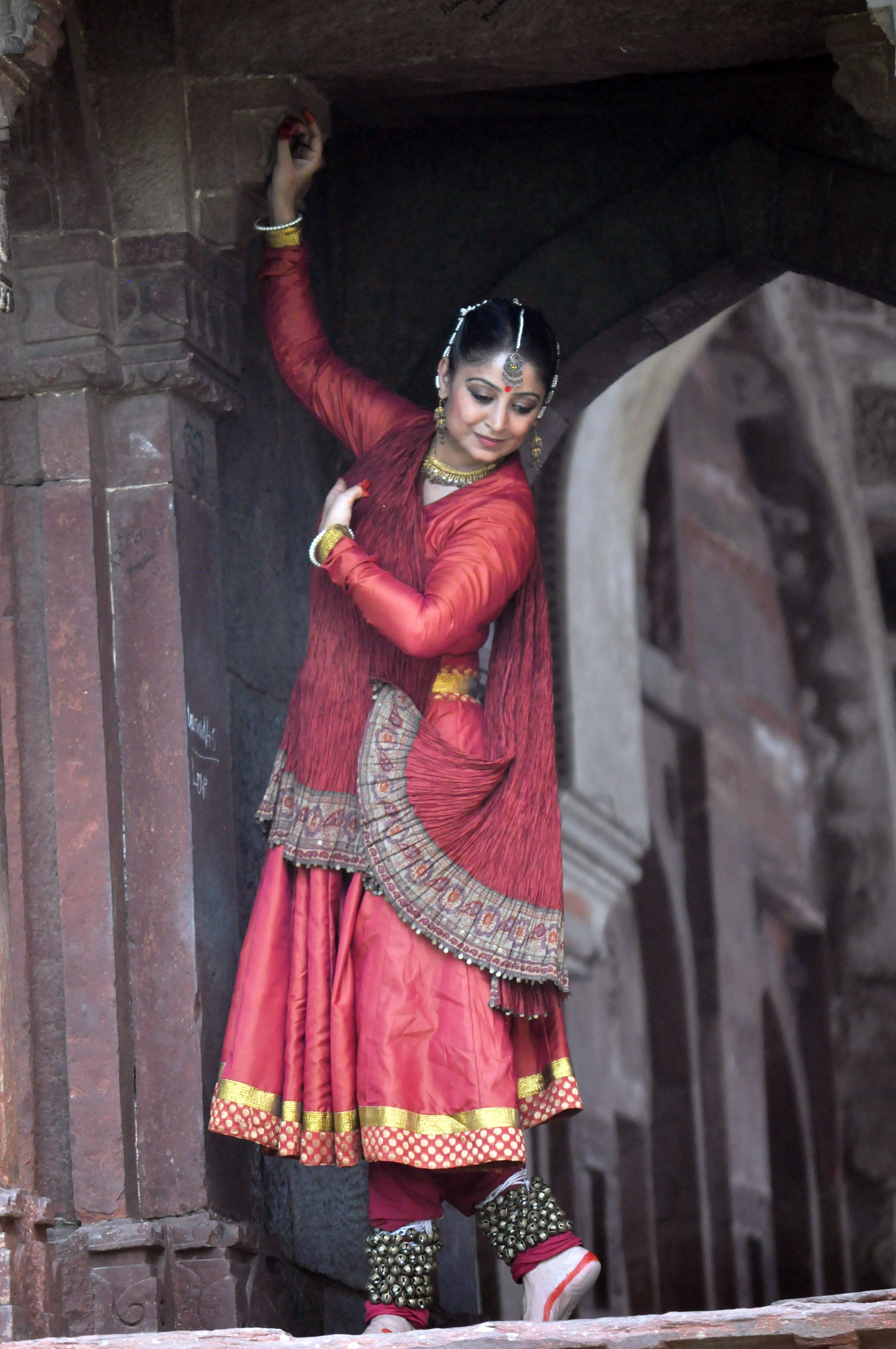
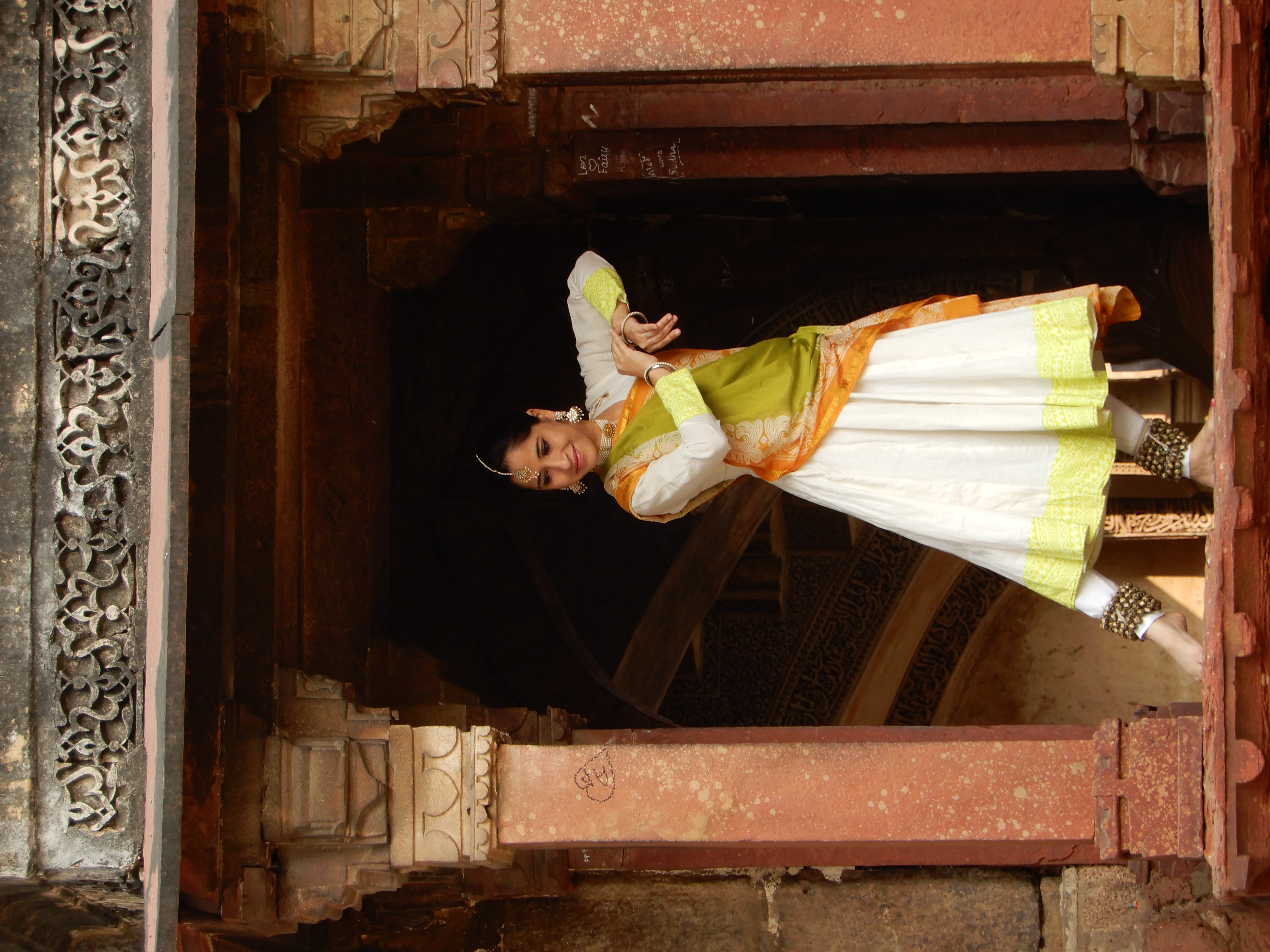
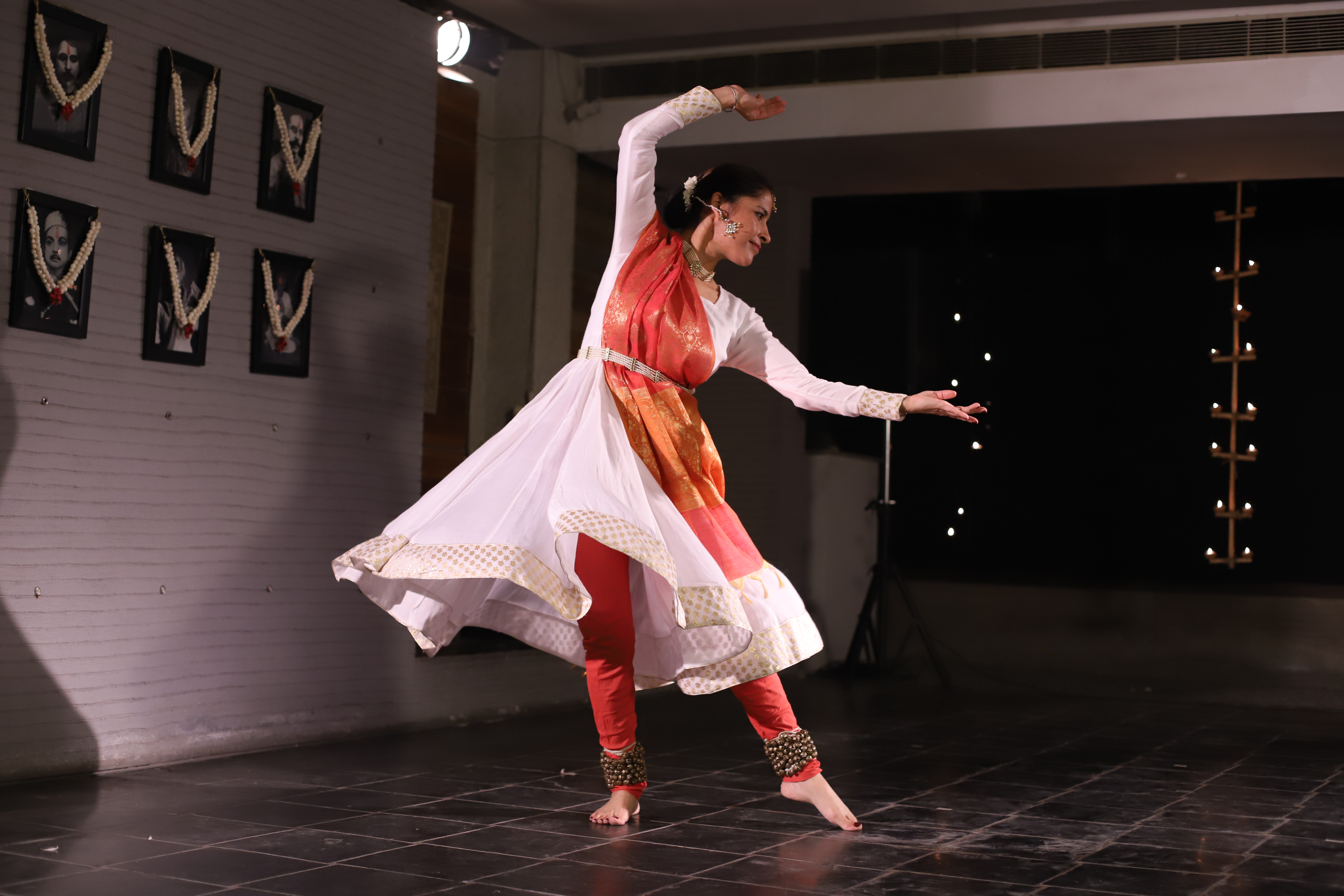
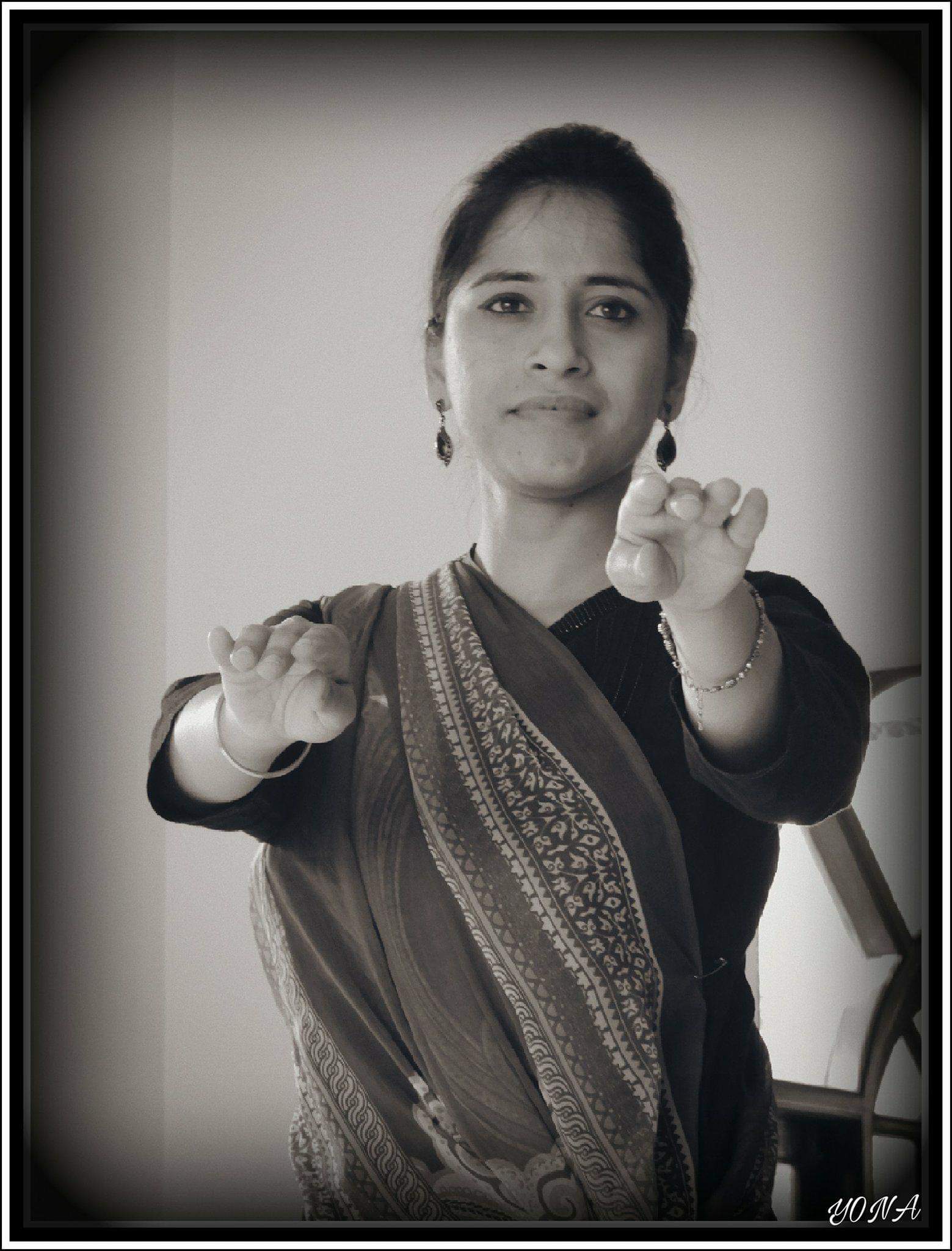
A Kathak dancer based in Delhi, Raman has spent two decades inside the form — its tatkar, its storytelling, its devotional root — and as many years pushing at its edges, asking what classical dance can hold of modern Indian art and writing.
She founded KathakReet, an art collective where Kathak meets literature, painting and live music — staging original work that treats tradition as a living conversation, not a museum.
Follow KathakReet →Mohika Shankar
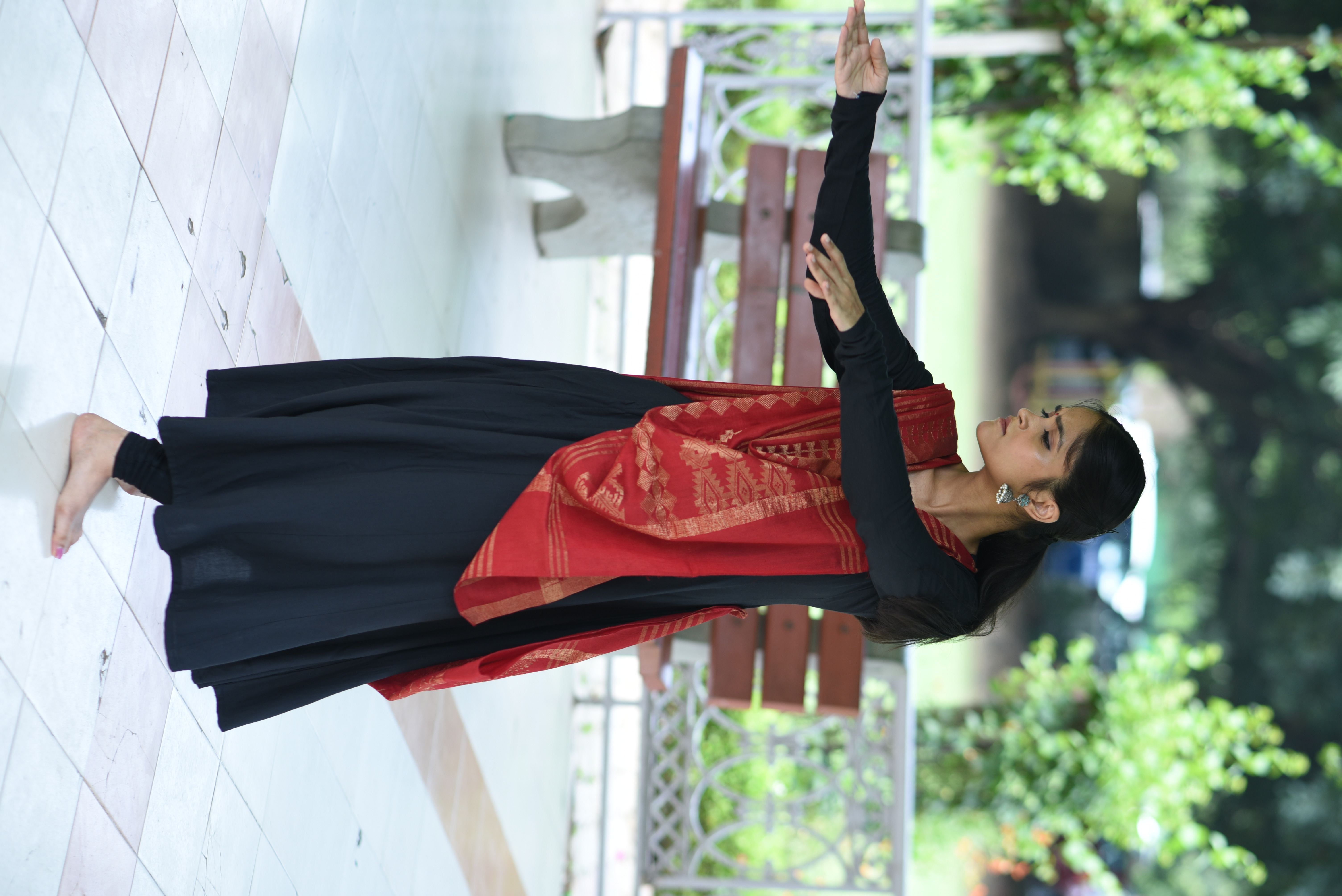
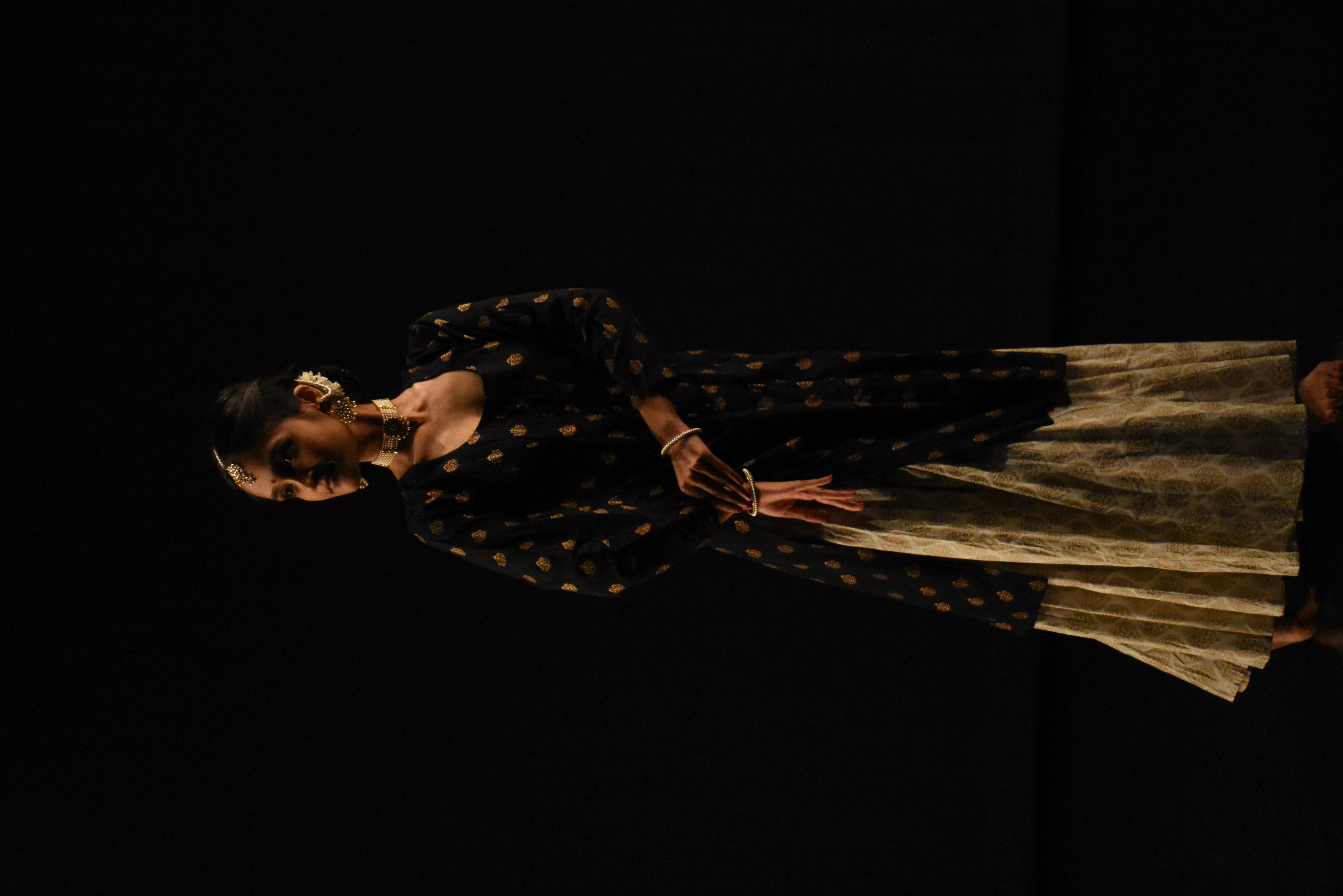
A young dancer and teacher of rare sensitivity, Mohika brings a fine, unhurried clarity to the form — as attentive in the classroom as she is on stage.
She co-directs and choreographs Amrita ke Raqs, and has been the quiet backbone of the production from its first rehearsal.
Pandit Munna Shukla
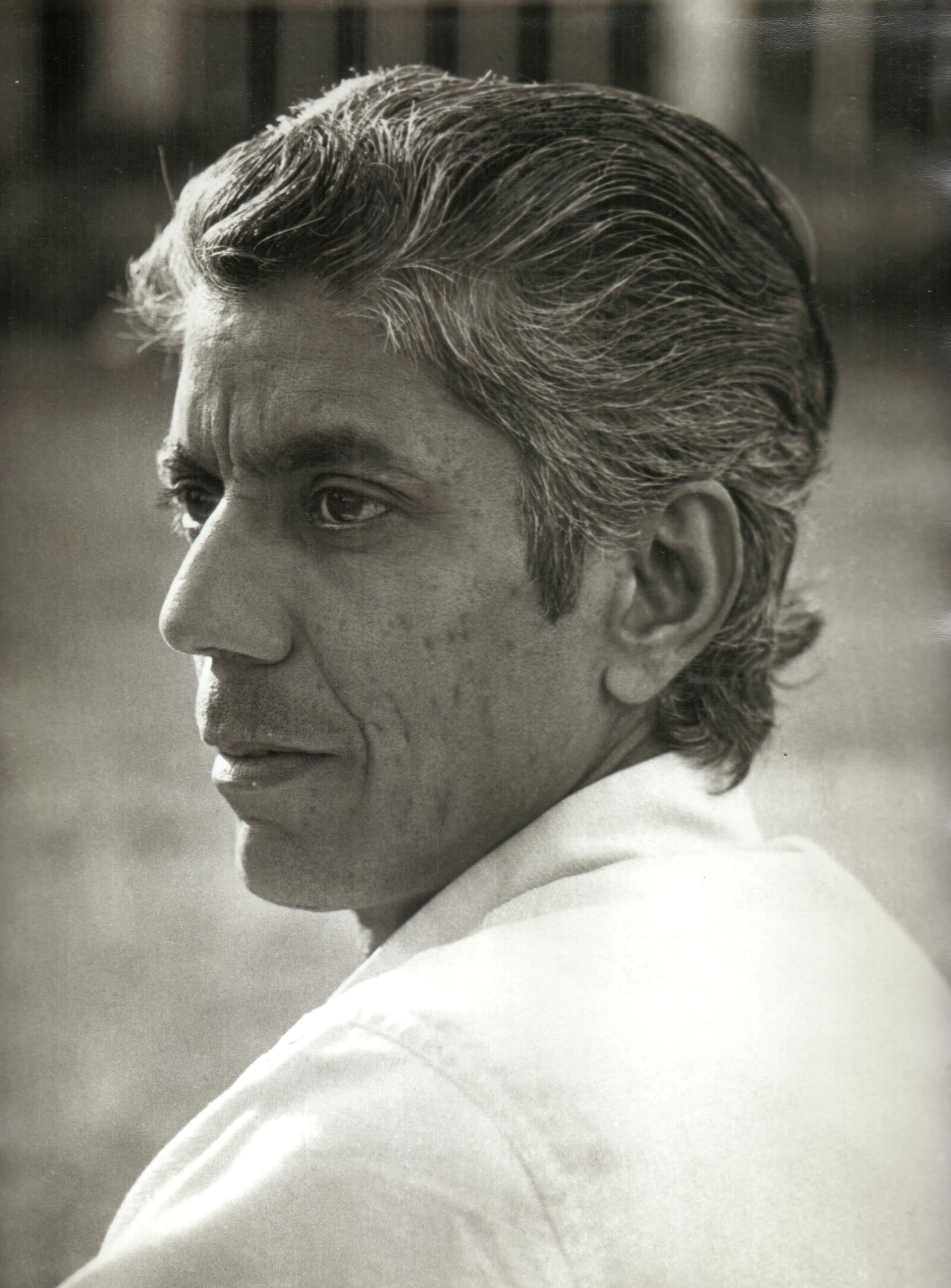
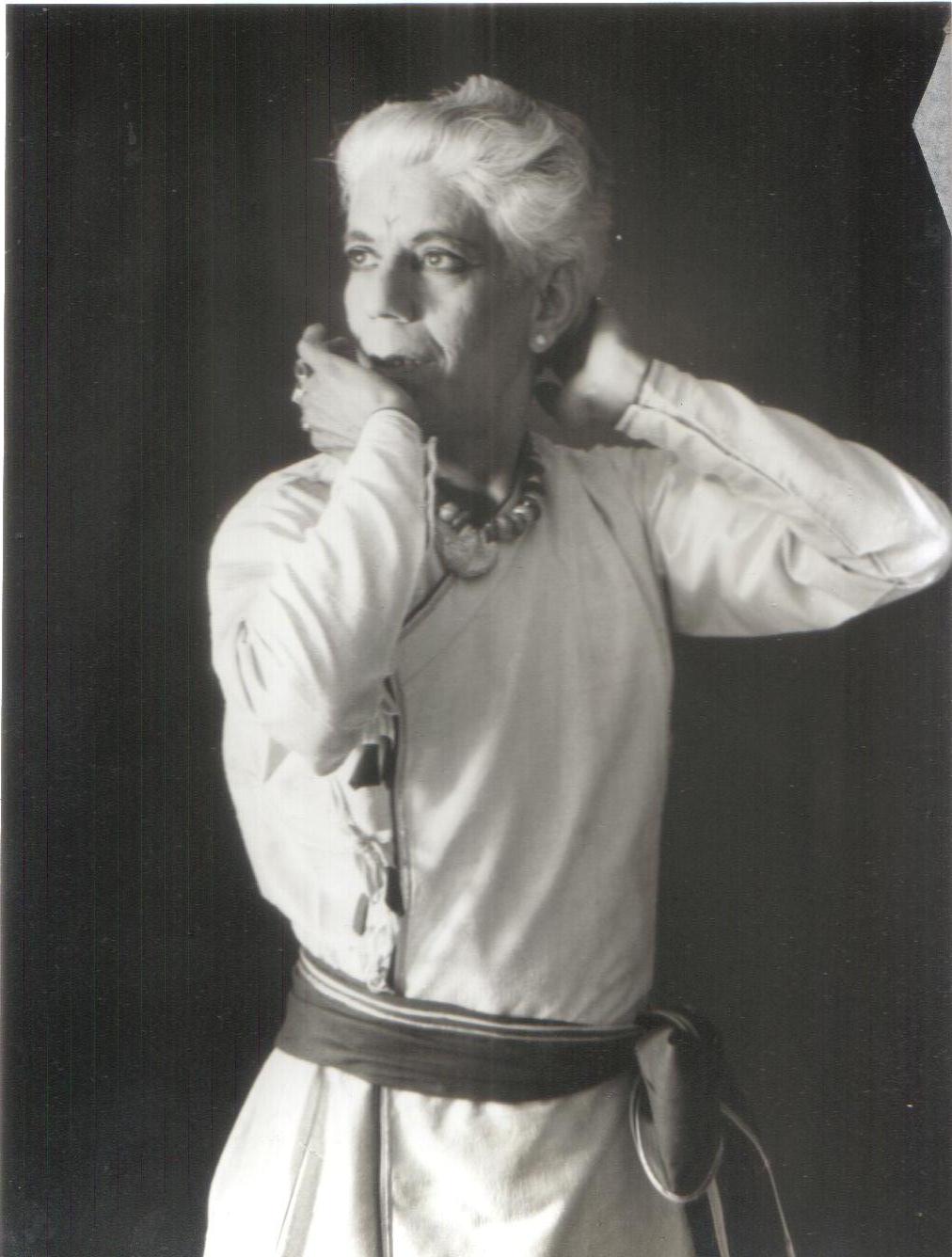
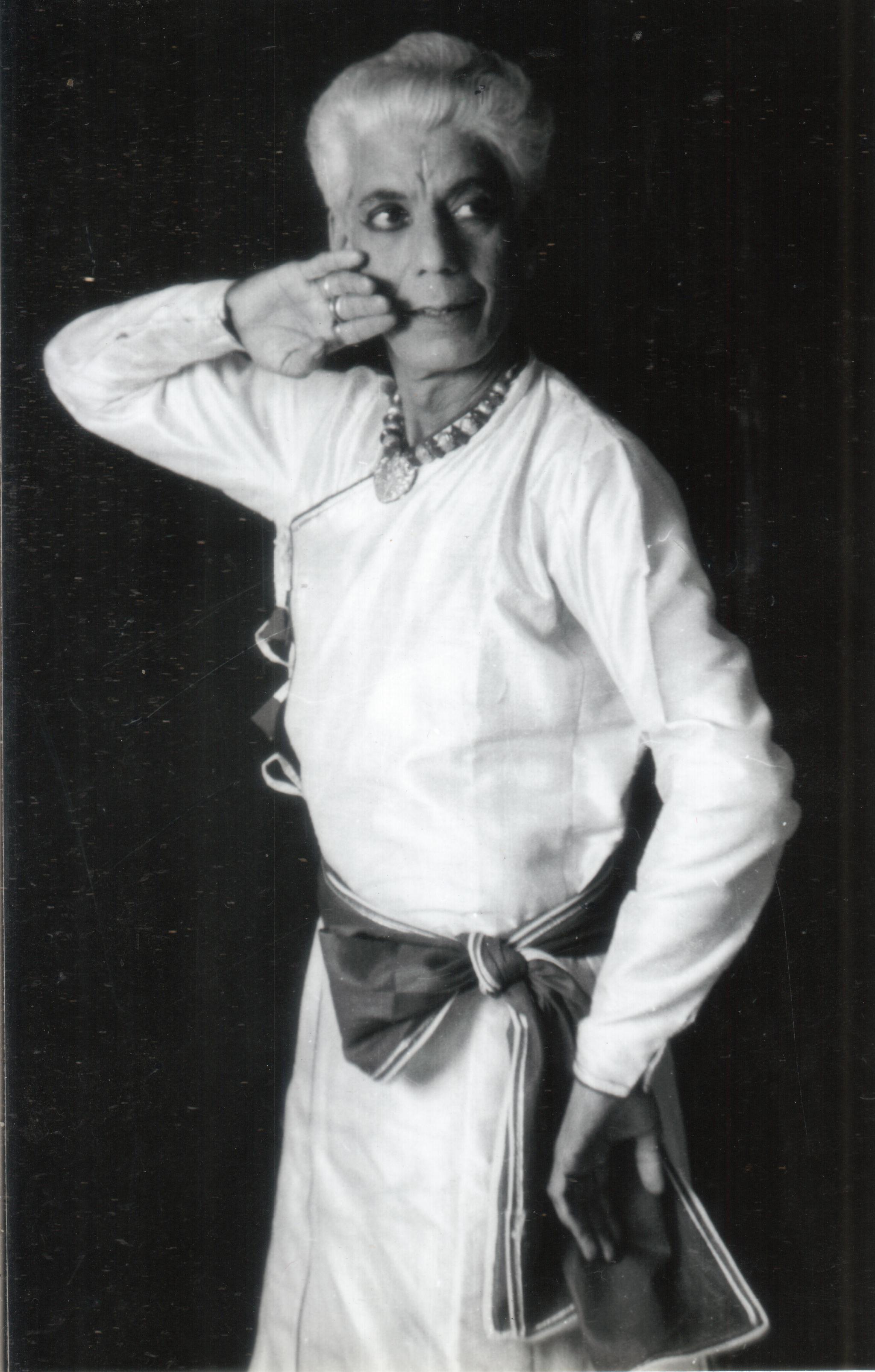
Raman spent many years of her training in his room. Pandit Munna Shukla was a Kathak guru and choreographer of the Lucknow gharana — born into one of the form's great lineages as a grandson of Achhan Maharaj and nephew of Birju Maharaj. He began under his father, Sunder Lal Shukla, and went on to train with Birju Maharaj in Delhi.
He taught advanced students at Kala Chhaya in Pune through the late sixties and seventies, and from 1976 until his retirement he was at Kathak Kendra, New Delhi — shaping generations of dancers. His choreographic works include Shaan-e-Mughal, Inder Sabha, Amir Khusro and Anga Mukti. He received the Sangeet Natak Akademi Award in 2006.
Much of what Raman carries into her own work — the discipline of tatkar, the patience of abhinaya — was learned from him.
शब्द तो शोर है, तमाशा है,
मौन ही सत्य की भाषा है
Ruchi Saini
Raman's earliest years in Kathak were spent with Ruchi Saini — a devoted disciple of the maestro, and the teacher who set her foundation before she went on to train with Guru Munna Shukla ji himself.
Her approach is systematic and unusually focused: presenting, understanding and documenting the finer nuances of the form with equal care.
Book a Kathak
masterclass
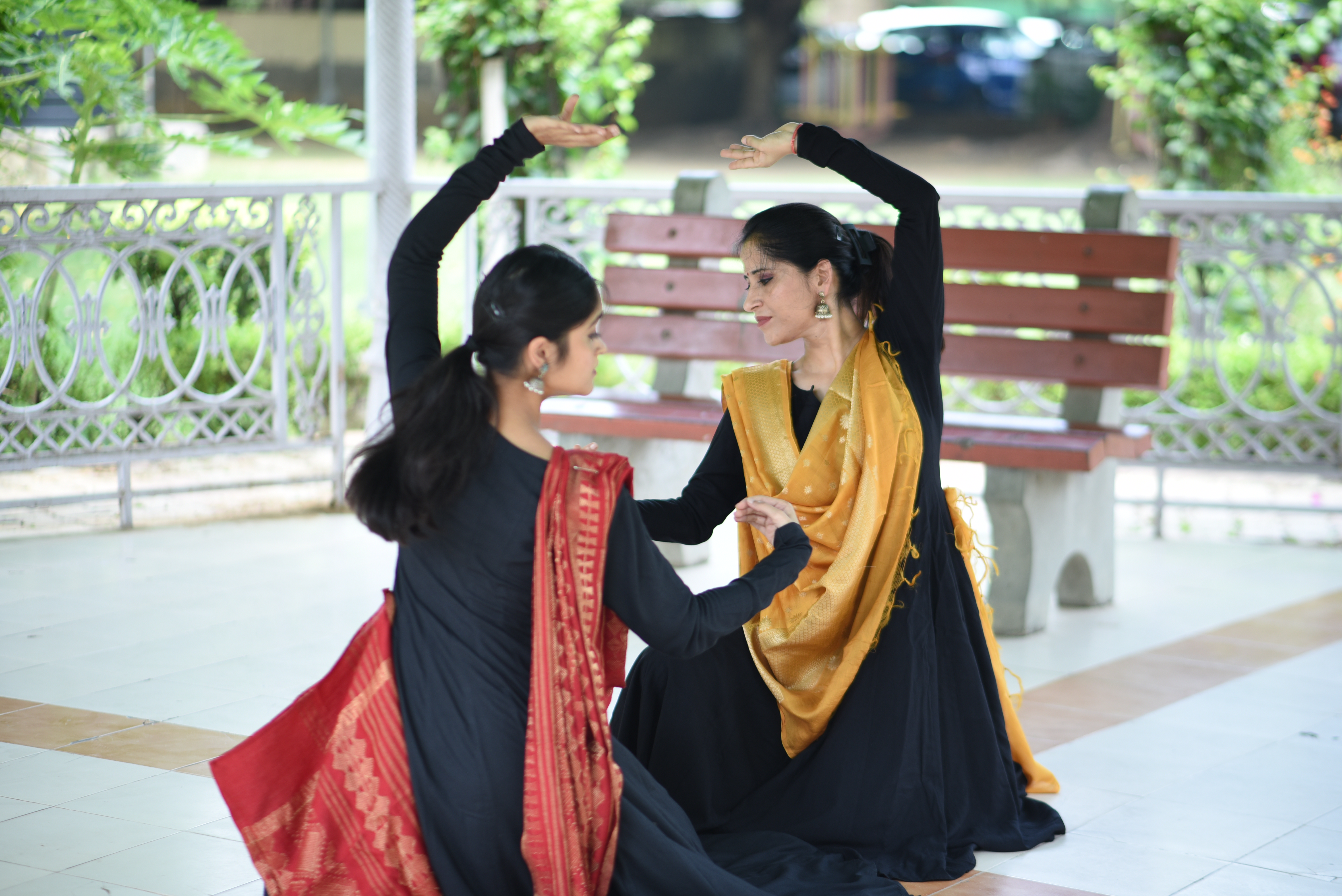
Spend an afternoon inside the form. Raman opens her studio for an intimate masterclass — tatkar and footwork, the geometry of the spin, and the expressive language of abhinaya. Open to absolute beginners and practitioners alike.
Secure your place in Raman's masterclass — payment confirms your booking, and we'll follow up by email with dates and studio details.
Reserve & pay →From the studio
"Raman doesn't perform tradition — she converses with it. You leave having seen something genuinely new."
"A rare evening where painting, poetry and Kathak speak the same breath. Quietly unforgettable."
Stay close to the work
News of Amrita ke Raqs, future productions, and life inside the collective.
Join the list →C.D. Deshmukh Auditorium
India International Centre · 40 Max Muller Marg, Lodhi Gardens, New Delhi 110003